
Communities Are the Frontline of Disaster Resilience, New Research from Environment Hubs Aotearoa Finds
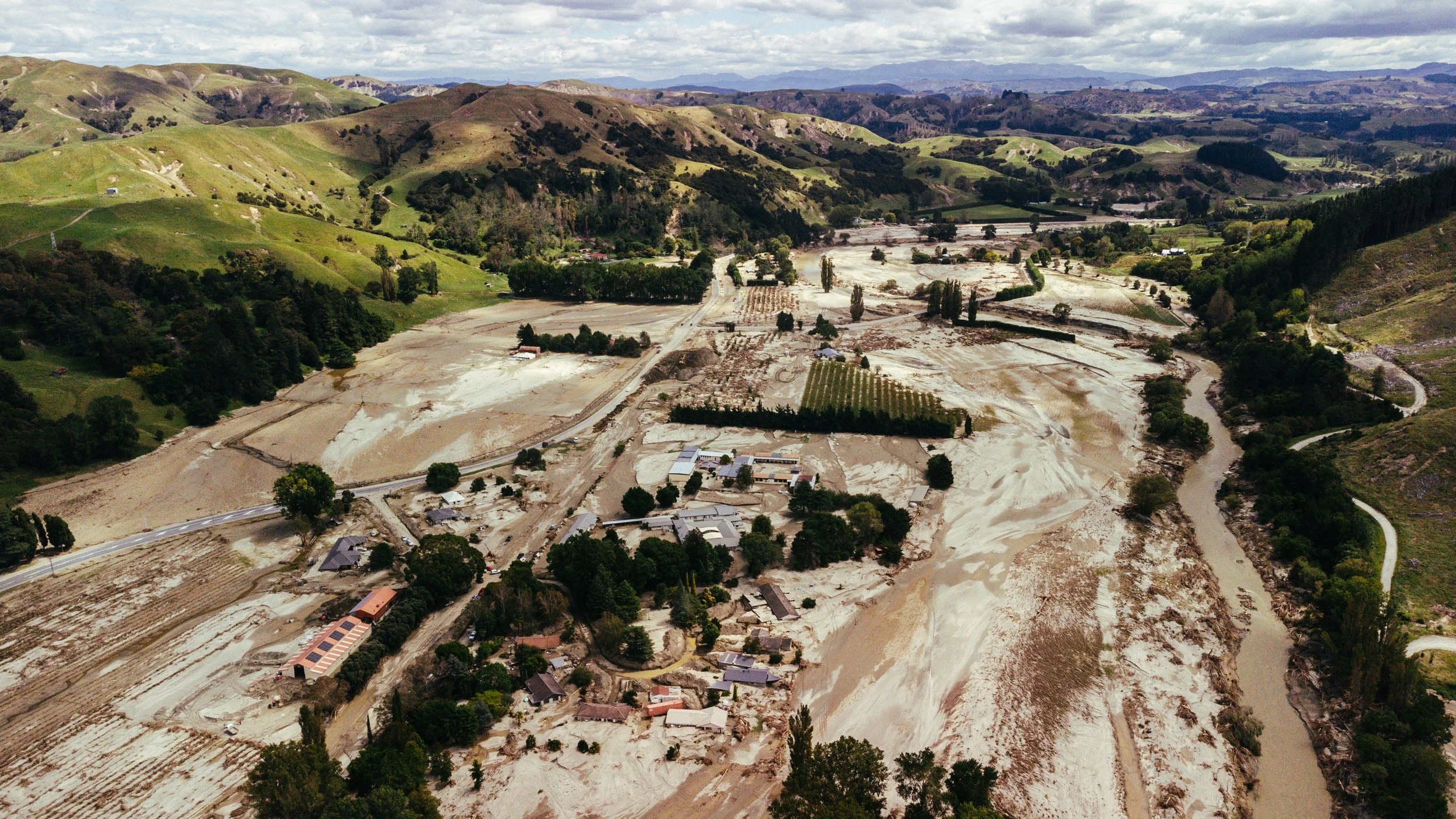
Aerial shot of Esk Valley
New research from Environment Hubs Aotearoa highlighting the role of communities in climate resilience is already attracting international interest. The findings have been shared with community organisations and academic networks in Scotland, Finland, the Netherlands and the United States, as well as with embassies including the European Union and Samoa.
Community is Climate Resilience, based on two years of research across Tāmaki Makaurau, Hawke’s Bay, and Te Tairāwhiti, captures the experiences of people who delivered supplies, opened marae, coordinated volunteers, and sustained recovery efforts long after media attention faded.
The study found that while communities repeatedly filled critical gaps, they were often under-resourced, poorly integrated into official systems, or even obstructed despite their effectiveness.
Georgina Morrison, Executive Officer of Environment Hubs Aotearoa says:
“Our call is for Government, Councils, and Emergency Management to engage communities as genuine partners, not just consultees. That work has to happen before emergencies. It requires building trust, mapping local capability, and supporting the people who will be first on the ground.
Drawing on the experiences of hundreds of community responders, the research highlights both the extraordinary capability of communities and the systemic failures that undermine their resilience. Marae and neighbourhood groups became critical hubs, evacuating people, checking on households and feeding communities, alongside persistent challenges such as under-resourcing and poor coordination.
Dr Jennifer Pannell, Environment Hubs Aotearoa lead researcher says:
“What stood out across all three regions was how quickly communities organised and how much they achieved with very little support. This research focuses on lived experience and draws out practical lessons about what helps communities respond well and what gets in the way.
The report identifies key themes for strengthening disaster preparedness: the vital role of trusted local organisations, the importance of pre-existing relationships and local knowledge, and the ramifications of top-down approaches that prioritise control over collaboration. The report sets out recommendations based on what community responders say is needed to build long-term resilience, including recognising Māori leadership, resourcing local capacity, improving coordination, and working with communities as genuine partners.
Josh Wineera, National Security and Defence Strategist says:
“Resilience lives in communities. When we honour local knowledge and strengthen networks, we build a safer future for everyone, not just in Aotearoa, but across the Pacific.”
As climate change drives more frequent and severe weather events, the report stresses that resilience cannot be delivered after a disaster. It already exists in communities and must be recognised, trusted, and supported beforehand.
Environment Hubs Aotearoa hopes the research will spark constructive conversations about how communities, mana whenua, and emergency agencies can work together to prepare for a future of climate-driven disasters.
The report is available at: www.environmenthubs.nz/community-resilience-research
ENDS
Notes for editors
Community is Climate Resilience: Lessons from Cyclone Gabrielle & the Auckland Anniversary Floods is published by Environment Hubs Aotearoa. It draws on 300+ survey responses, in-depth interviews, a focus group, and a review of national and international evidence.
The report includes case studies, participant quotes, and practical recommendations for building disaster resilience in partnership with communities.
The research was led by Dr Jennifer Pannell, Dr Karen Hytten (Massey University), Dr Lauren Bland, and Georgina Morrison (Environment Hubs Aotearoa), with input from Renar Berandi and Sophie Els. We acknowledge the funders, reviewers, collaborators, and research participants who contributed to the study.
About Environment Hubs Aotearoa
Environment Hubs Aotearoa is a nationwide network of 23 regional hubs connecting organisations to strengthen communities and environmental resilience. The network supports sustainable, locally led initiatives and shares regional knowledge to improve collaborative response to challenges, including climate-driven disasters.